Navigation

Get in touch
Logo
News

Telekom T Cloud Public with OTOKO®

Telekom Cloud. With a clear operations concept.

Many decisions lie between subscribed Telekom Cloud services and a production application: network design, data storage, permissions and responsibility in the event of a fault. For T Cloud Public, formerly Open Telekom Cloud, OTOKO® takes on this integration work. Together, we create an environment whose setup your team understands and whose operation is clearly assigned.

What we take on for you
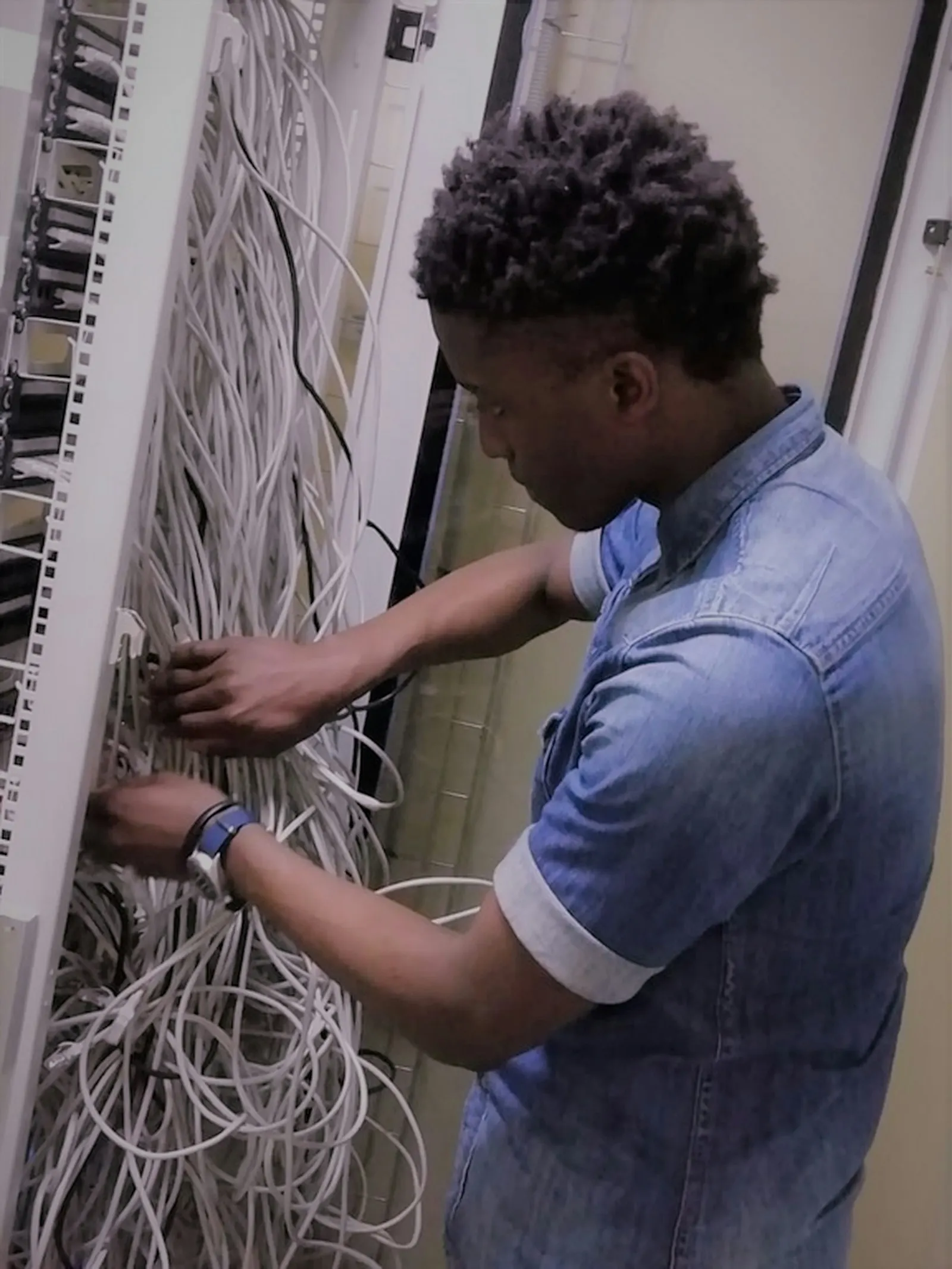
man in blue denim button up shirt standing beside white metal frame — illustrative image
Telekom T Cloud Public
Telekom T Cloud Gold

Planning, implementation and agreed operations by OTOKO®

Symbolic image · not a photograph of a provider site

Your brief for OTOKO®

Connecting Telekom technology with your corporate IT.

An existing Open Telekom Cloud environment needs to be extended, local applications need to move or several locations need shared access. Your data paths and operational requirements are the starting point. From this, we derive which services are needed and which work lies with your team, with Telekom or T-Systems and with OTOKO®.

What you engage us for

The provisioned platform is the foundation. Building on it, our scope of services covers architecture, setup, connection and the agreed migration of data and applications. Access, backups and operational tasks are documented before the handover. Ongoing support can be limited to exactly the components for which you need assistance.

The services in detail

Scope

From Telekom resources to a running application.

Compute, network and data storage work together. The following services connect these to your existing IT and make clear which integration and operational tasks OTOKO® takes on.

Provisioning the required servers

Compute capacity is planned based on the application. Together, we determine the specifications and reserves, set up virtual systems and separate the required environments. Access, purpose and responsibility are documented so that later extensions can build on them.

What your team keeps working with

A sized server architecture with documented region, system assignment and provisioning configuration.

Technical implementation

Compute: Elastic Cloud Server (ECS)

We plan virtual servers based on CPU, memory, operating system and load profile. Development and production systems receive separate access and coordinated provisioning rules. Available instance types and regional capacities are checked against your requirements before implementation.


Connecting sites and applications

Sites, databases and applications need targeted connections. Their communication paths shape the network design, with matching access rules and name resolution. After setup, we jointly check whether the required services are reachable and how an interrupted connection would affect operations.

What your team keeps working with

A network plan with data flows, authorized connections and traceable tests.

Technical implementation

Network: VPC, VPN & load balancing

Virtual Private Cloud (VPC), subnets and security rules form the network boundaries. VPN and suitable connections link local systems to the Telekom Cloud. Elastic Load Balance can distribute requests across application instances. We check reachability, DNS, access rules and behavior during connection disruptions.

Migrating data and databases

Data migration means more than copying files. Storage targets, database access and backup paths must fit the application. We coordinate the transfer order and testing with your team so that completeness and usability can be checked before business acceptance.

What your team keeps working with

A data and storage plan with transfer path, responsibilities and business acceptance criteria.

Technical implementation

Storage, databases & data migration

Object Storage Service (OBS), block storage and Relational Database Service (RDS) serve different purposes. We assign data assets to the appropriate services and plan transfer, permissions and backup. Storage needs and data traffic are included in the calculation.

Building a platform for containers

Container applications need a controlled path from image to running version. We set up the platform with access, resources and deployment procedures. Even with a managed service, tasks such as application configuration, approvals and data recovery remain explicitly assigned.

What your team keeps working with

A coordinated container platform with a release path, access model and handover to operations.

Technical implementation

Kubernetes with Cloud Container Engine

Cloud Container Engine (CCE) is one option for containerized applications on T Cloud Public. We plan clusters, workers, networks and persistent storage together with the application team. Roles, deployment processes and updates require a clear division of tasks even on a managed platform.

Making access and changes traceable

Who is allowed to change resources, and how can a change be traced later? Roles, administrative access and the agreed logging translate your requirements into concrete settings. The handover records what has been implemented and which organizational decisions still rest with you.

What your team keeps working with

A documented permission concept and a list of implemented controls and remaining tasks.

Technical implementation

Identities, keys & operational evidence

IAM, logging and key management are aligned with your internal requirements. We document administrative access, roles and authorizations. Neither the choice of location nor the provider’s certificates replace a review of your specific application and configuration; the required evidence is compiled during the project.

Supporting your Telekom Cloud environment

In day-to-day operation, reachable contacts and clearly assigned tasks are what count. For ongoing support, components, maintenance, monitoring and change paths are brought together in a service catalog. It also states when Telekom or T-Systems is responsible and when OTOKO® or your application team takes over.

What your team keeps working with

An operating model with reporting channels, service boundaries, maintenance planning and recovery procedures.

Technical implementation

Managed operations for Telekom Cloud

We coordinate monitoring, patches, backups and changes with your team. Responsibilities between Telekom or T-Systems, OTOKO® and the application team are described separately. Service hours and response targets apply according to the agreed service catalog, not merely because of the chosen cloud.

Planning & implementation in detail

Telekom Cloud from the subscribed service to the supported application.

The platform provides resources. How this becomes an environment your company can actually use depends on applications, data paths and the division of tasks. Especially with existing Open Telekom Cloud landscapes, it is worth taking a joint look at configuration and operating organization.

Derive service requirements from the application

The starting point is the question of what your application actually needs: computing power, data storage, reachability and connections to existing systems. A list of desired servers does not yet answer which components need to work together or how load and data volume will develop. Together we capture these relationships and separate fixed requirements from assumptions. Building on this, a suitable selection of Telekom Cloud services is prepared. Existing resources are included so that working structures are not replaced without a business reason.

For the setup, environments, permissions and network areas are assigned in a way your team can follow. Test systems and production applications each receive the boundaries they need. We also clarify how new resources are added and who approves changes. The documentation describes not only the initial state, but also the planned paths for expansion. This is especially important when several internal teams or external application partners later work on the same environment.

Prepare locations and data migration together

An application in the Telekom Cloud may still depend on local user management, data sources or other locations. These connections therefore belong in the planning at an early stage. Together we review the required data paths, name resolution and access rules. This also considers which processes must still work if a connection is interrupted. These requirements produce a test scope that reflects the application’s communication and is not limited to the isolated reachability of individual resources.

For the data migration, the transfer path, the data snapshot and the functional checks are aligned with each other. Who confirms that the application works correctly with the migrated data? Up to what point may changes still be made in the old system? Which backup is available before a cutover? The answers determine the process and the responsibilities. After the technical setup, we support the agreed tests and record open points. The migration thus becomes a coordinated transition whose success your application team can assess from a business perspective.

Separate platform services from your own operational tasks

A provisioned cloud service does not automatically take over all tasks related to the operating system, data and application. Before support begins, we therefore distinguish the subscribed platform service from the work that arises within your environment. This includes, for example, configuration changes, permission management, functional tests after updates and the handling of alerts. The responsibilities of Telekom (or T-Systems), OTOKO® and your own teams are recorded against the specific setup, rather than merely naming general areas of responsibility.

The resulting support scope describes components, service hours and reporting channels. For incidents, it clarifies who performs the initial assessment and how further parties are involved. Maintenance and recovery are also assigned named owners. If part of the tasks remains with your IT department, this internal share is explicitly documented. This makes capacity planning easier and later expansions open for discussion: a new application can be checked against the existing scope before additional operational tasks arise unnoticed.

How we work together

You know your business.
We handle the agreed cloud work.

You do not have to organize every technical step yourself. We record tasks and decisions and involve your team wherever its knowledge or approval is needed.

01

Reconciling services and responsibilities

Application requirements and existing Telekom services are compared. Open issues concerning integration and support are incorporated into the scope of work.

Your contribution: Provide existing documentation and name the contacts for the platform and applications.

02

Testing connections and applications

Setup is followed by testing of access, data paths and the intended applications. The results determine how the handover is prepared.

Your contribution: Check functional usability and coordinate any necessary changes with your teams.

03

Recording the scope of support

The handover distinguishes between the tasks of Telekom or T-Systems, OTOKO® and your team. Reporting channels and maintenance are documented accordingly.

Your contribution: Confirm acceptance and the remaining tasks of your application team.

Meeting room at the OTOKO® Cologne office

Example project scenario

Deploying a business application on T Cloud

This is what a joint project could look like. The specific scope results from your current situation.

  1. The current situation

    An internal application needs new infrastructure but stays connected to local services.

  2. Our approach

    We plan the service and location selection, test the connection and prepare the move together with the application team.

  3. The target state

    A documented target operating model with clarified data paths, responsibilities and acceptance criteria.

What you get

Results your team
keeps working with.

  • T Cloud target state with documented service and region selection

  • Implementation plan with migration, testing and acceptance

  • Documented operations with responsibilities and a cost overview

Telekom T Cloud Gold

Telekom technology.
Your specific needs.

We support you in selecting and integrating suitable Telekom Cloud services. Data locations, access rules and the scope of operations are defined explicitly within the project.

T Cloud Public

The former Open Telekom Cloud is now called T Cloud Public. We review existing environments and new projects together with your requirements for connectivity, identities, migration and operations.

Understand the connection to your IT

From interest to a concrete engagement

How we prepare
your project.

For the first consultation, these documents do not yet need to be complete. Together we clarify what is available and which information the assessment should add.

Helpful for getting started

  • Existing OTC/T Cloud projects and subscribed services
  • Requirements for data locations, interfaces and restart
  • Contacts for the Telekom contract, internal IT and applications

How this becomes a specific quote

The scope of services, the involvement of your team, required access, acceptance criteria and the handover are recorded in the quote. Provider fees, project services and ongoing operations are clearly separated.

Discuss your assessment

Before you start

Your questions.
Clear answers.

Which Telekom cloud do we mean by T Cloud Public?

T Cloud Public is the current name of the former Open Telekom Cloud. Within the project, we explicitly clarify which Telekom services, regions and operational services should meet your requirements.

Which services does OTOKO® offer for Telekom T Cloud Public?

Telekom Cloud for enterprises: OTOKO® supports T Cloud Public (formerly Open Telekom Cloud) from consulting and architecture through migration and Kubernetes to agreed managed operations.

Can the cloud be connected to our data center?

Yes. A hybrid architecture is planned based on your interfaces, identities, networks and requirements for availability and data locations.

Are Telekom Cloud, T Cloud Public and Open Telekom Cloud the same thing?

Open Telekom Cloud was renamed T Cloud Public. In everyday usage, “Telekom Cloud” can refer to several cloud offerings from Telekom. We therefore specify in the proposal whether T Cloud Public or another offering is meant.

Who does what: Telekom, T-Systems and OTOKO®?

The specific provider and contractual scope follow from your cloud contract. OTOKO® supplements this with the agreed consulting, integration and operations tasks. A responsibility matrix defines the boundaries between platform, operating system, data and application.

Is all data automatically processed in Germany?

This is not guaranteed by the platform name alone. Region, services, backup objectives and connected systems are selected and documented according to your requirements. All data processing must be considered in the context of the specific project.

Can existing Open Telekom Cloud environments be carried over?

Yes. The starting point is an assessment of the projects, access, networks and operating procedures. The renaming alone does not require a blanket rebuild; necessary changes are derived from your actual environment.

Telekom T Cloud Public with OTOKO®

What should your Telekom Cloud deliver next?

Whether it is a new application or an existing Open Telekom Cloud landscape: an overview of systems, locations and the desired level of support is enough to get started. From this, we develop the next technical steps and define responsibilities.

First consultation on Telekom T Cloud Public

Our Partners

  • Microsoft
  • Microsoft Azure
  • Amazon AWS
  • Google Cloud
  • Thales Group
  • Arrow ECS
  • Vodafone
  • IBM
  • Veeam
  • Atlassian
  • JetBrains
  • NinjaOne
  • OPSWAT
  • Utimaco
  • Eviden

Accessibility

Adjust the display to suit your needs.

A simple version is not available for this page yet.

Settings currently apply to this visit. Allow saving in Cookie settings to remember them.