You have the idea, but not yet the path.
First we clarify users, benefits and system boundaries. A concept or prototype tests the key assumptions before you award the contract for the full development.
View starting point ®
®Software Development & Operations / OTOKO®
We develop custom software, web portals and apps, modernize existing systems, and take on interfaces, testing, releases and maintenance. You can start with a clearly scoped task or shape the entire process with us.

Eight services. One clear path.
Choose based on your starting point. Each subpage sets out the scope, concrete results and the questions that should be clarified before implementation.
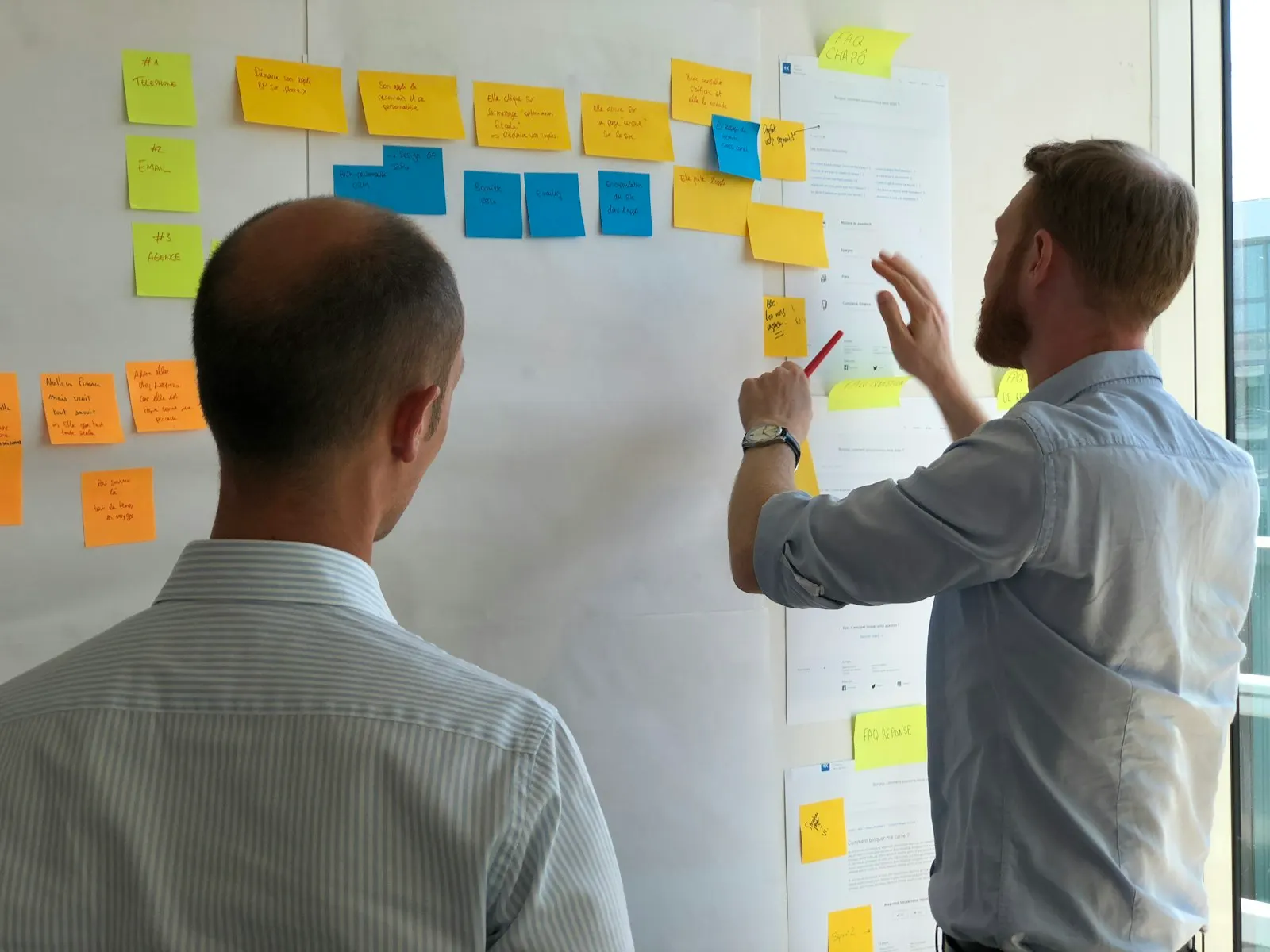
When business units need new features but IT must first clarify costs, dependencies and risks, we create a shared basis for decisions.
Learn about the service and approach
Business applications, digital products or internal tools: we develop software for processes that cannot be meaningfully mapped with existing systems.
Learn about the service and approach
Customers want to complete their requests, field teams need information on site and business units need a reliable overview.
Learn about the service and approach
A discontinued framework, code that is hard to understand or missing interfaces can turn any change into a risk.
Learn about the service and approach
When ERP, CRM, portals and business applications each hold a different version of the truth, errors and rework follow.
Learn about the service and approach
Defects found shortly before a release cost time; defects in a critical business process cost trust.
Learn about the service and approach
When releases depend on individual people and manual steps, every change becomes needlessly risky.
Learn about the service and approach
Security updates, new requirements and disruptions do not end with acceptance.
Learn about the service and approach
The application does not end at release
A user interface can look good and still fail in daily use: data is missing, permissions do not fit or no one can handle an incident. That is why we consider business logic, interfaces, quality and operations together.
The individual tasks remain clearly scoped. You see which service solves which problem and which result serves as the basis for the next step.
Your sensible starting point
First we clarify users, benefits and system boundaries. A concept or prototype tests the key assumptions before you award the contract for the full development.
View starting pointWe examine maintainability, dependencies and known defects. From this we derive a sequence for stabilization, modernization or targeted replacement.
View starting pointTests, approvals and deployments are combined into one transparent process. Responsibilities and fallback paths are part of it, as is automation.
View starting pointCollaboration with clear responsibilities
The business unit and IT name the goal, current problems and key dependencies. We record open questions and scope the first work package. This makes clear which decision is yours and which preparatory work we take on.
You see working features, technical evidence or documented decisions. Feedback is prioritized; additional requests receive a transparent assessment. Progress is measured by results, not only by hours spent.
Source code, rights, documentation, briefing and support are agreed to match the assignment. For go-live, we clarify data migration, approval and the fallback path. Your team knows who is responsible for changes and incidents after delivery.
How the services fit together
OTOKO® supports clients’ own software products, internal business applications and digital customer offerings. Consulting, development, integration, quality assurance and operations can be ordered individually or combined into one coherent project.
If an idea is still unclear, consulting creates a basis for decisions. If a clear process already exists, we develop the required functions and user interfaces. For existing applications, we consider targeted extension and gradual modernization before planning a complete rebuild.
Interfaces and data migration are not treated as add-on tasks for later. They determine whether the software works in actual day-to-day use. Business rules, roles and exceptions are clarified together with the people who own the process and will use it later.
A usable result includes more than a visible user interface. Depending on the engagement, this also includes server-side processing, tests, deployment and documentation. We agree on verifiable stages and make open dependencies visible, so that your team can judge progress by working processes.
For go-live, we plan data migration, approval and support. Maintenance and further development receive clear responsibilities and their own scope. This keeps the application changeable after the first release, instead of turning into an unmanageable one-off project with every new requirement.
Guidance for your project
Possible starting point: a manual approval process is to be digitized. We first scope one complete case, develop it together with its future users and connect the necessary existing systems. Only after a review by the business unit do we add further variants and user groups.
We align the starting point with your goals and existing systems.
Before you place an order
If the goal and the solution approach are still open, start with software consulting and architecture. For an existing process, choose development or portals and apps; for a problematic legacy system, choose modernization. Interfaces, testing, DevOps and maintenance can be ordered on their own or combined with a development project.
Yes. A scoped first work package can examine requirements, code, architecture or operations. It ends with documented findings, open risks and a proposal for the next steps. The subsequent implementation is a separate decision.
We can take on defined work packages or collaborate with your business and development teams. Responsibilities for architecture, business decisions, reviews and approvals are agreed in advance. Shared repositories, documentation and knowledge transfer are part of the agreed collaboration.
The target environment can be your data center, a suitable cloud or a combination of both. Data locations, external services and operational responsibility are reviewed before the architecture decision. Choosing a region alone does not answer every question about data flows and access rights.
We define results and acceptance for each work package. Effort drivers such as interfaces, data quality and availability requirements are named early. Where requirements are still open, smaller stages with verifiable results help; changes are assessed for their impact on scope and schedule.
The scope of delivery is defined in the proposal and can include source code, build configuration, tests, and architecture and operations documentation. Usage rights, licenses for third-party components, access and briefing are explicitly agreed. This makes clear how your team can take the application forward.
The next step
A short description of your application, the problem and your goal is enough to get started. The selected service is carried over into your contact request.
Discuss your software project