
Navigation

Get in touch
Logo
News

Data integration

Bad data costs good decisions.

When figures from ERP, CRM and production do not match up, a nicer dashboard will not help. We develop data pipelines that connect sources, standardize formats and handle faulty inputs visibly. Your business unit can trace where a value comes from and when it was last updated.

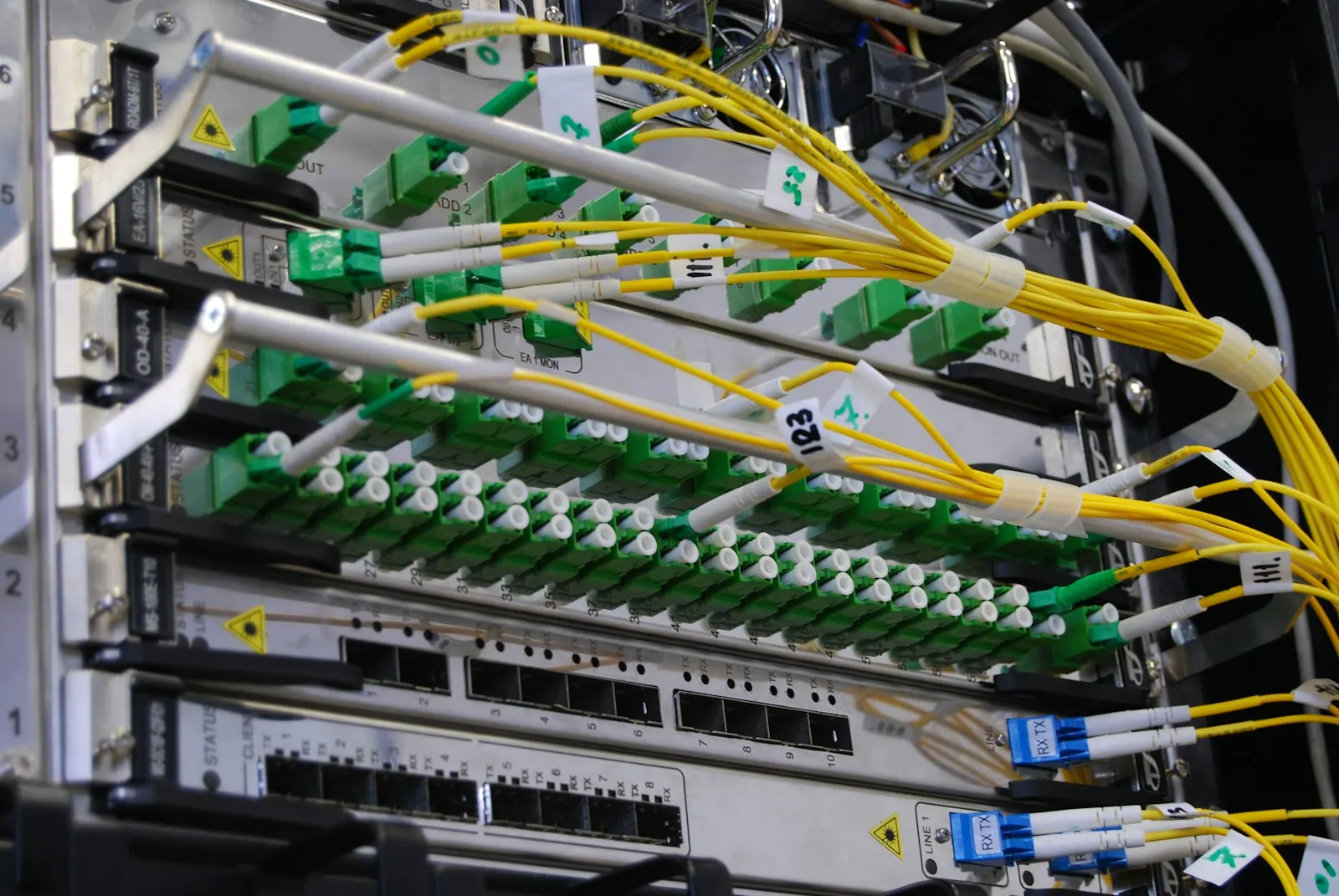
Fiber optic cables connected to a network switch in a server rack — illustrative image
Pipelines as code with tests · Planning and implementation by OTOKO®

Your brief for OTOKO®

What we take care of for you.

ETL means transforming data before loading it into the target; with ELT, processing takes place mainly in the target platform. We choose based on data volume, protection needs and available compute resources. More important than the acronym are rules for mandatory fields, units, time values and business keys. A missing price, for example, must not silently become zero. Faulty records get a traceable clarification path with an assigned owner and options for corrected processing.

The possible scope of services

  • Connection of SAP, Microsoft Dynamics, Salesforce, databases, files and APIs
  • Batch and streaming pipelines with validation rules for format, duplicates, completeness and plausibility
  • Versioned pipelines with automated tests and a release process
  • Traceable data lineage from the source to the report
  • Operations with alerting on failed runs and quality violations

We define the specific scope, your involvement and the acceptance criteria before the start.

Technology explained clearly

How we carry out the task.

01

Making changes and reruns manageable

For incremental processing, we store progress and lineage. Delayed events, later corrections and deleted source data need their own rules. Change data capture can record database changes; we check whether that fits based on the database, permissions and the impact on source operations. Versioned transformations and test datasets safeguard changes to columns and formats. For repeated deliveries, we use stable identifiers or matching rules, so an invoice delivered again does not appear twice in the analysis.


02

Data quality becomes an operational task

We agree on permissible delays, quality thresholds and an escalation path. The handover includes pipelines, tests and instructions for faulty or delayed data. During acceptance, we run through an interrupted load process and a schema change. For this, we need source descriptions, sample data and someone from the business unit who can judge whether the transferred values are correct in business terms.

Meeting room at the OTOKO® Cologne office

A verifiable result

What you keep working with.

  1. Pipelines as code with tests
  2. Validation rule set and quality reports
  3. Lineage record per data set

The handover brings together implementation and documentation. Together, we review the agreed cases and record any remaining tasks.

Your project in detail

From individual interfaces to reliable data flows.

We do more than copy data. We clarify what meaning a record has in the target system, how changes are detected and how an interrupted run is resumed without data loss.

Agree on data contracts between source and target

A data contract describes expected fields, data types, units, permitted values and update frequencies. We align these expectations with the owners of both systems and implement machine-checkable rules where they catch errors early. A new column has to be handled differently from a change in the meaning of an existing status code.

For master data, we determine together with the business unit which system is authoritative. Conflicts are not resolved by an arbitrary technical order. Duplicates, missing assignments and contradictory changes get a defined resolution path; the affected records remain identifiable.

Handle late deliveries and retroactive corrections

A daily load can be technically successful and still be incomplete from a business perspective. We compare expected and delivered volumes, check time periods and explicitly handle late data. Progress markers, stable keys and suitable retry rules prevent a late delivery from creating the same invoice multiple times.

The handover to operations includes alerts, diagnostics and controlled restarts. When the source system changes, we test with representative data before switching over the production data flow. Historical corrections require a well-defined rebuild of the affected datasets, so that current analyses do not become inconsistent unnoticed during the repair.

Illustrative project scenario

How the service helps in everyday use.

Example: An ERP system delivers invoices at night, and the CRM system updates customers during the day. We coordinate business keys and time references so that a report uses the correct customer relationship. If an assignment is missing, it appears in an editable error list instead of as an incorrect revenue attribution.

This example explains a possible process and is not a customer reference.

Before the first step

Your questions about Data integration.

Does everything need to be processed in real time?

No. A daily report often does not need a streaming platform. We distinguish timeliness requirements by process and avoid operational complexity that brings no business benefit.

Who corrects faulty master data?

Business responsibility stays with the agreed data owner. We detect and flag errors, build correction paths and prevent unchecked values from carrying through unnoticed.

Your project

Which task would you like to solve?

Describe your situation and the desired result. The selected service will be included in the contact request.

Request this service

Our Partners

  • Microsoft
  • Microsoft Azure
  • Amazon AWS
  • Google Cloud
  • Thales Group
  • Arrow ECS
  • Vodafone
  • IBM
  • Veeam
  • Atlassian
  • JetBrains
  • NinjaOne
  • OPSWAT
  • Utimaco
  • Eviden

Accessibility

Adjust the display to suit your needs.

A simple version is not available for this page yet.

Settings currently apply to this visit. Allow saving in Cookie settings to remember them.