

Navigation

Get in touch
Logo
News

Hetzner with OTOKO®

Operating Hetzner. Keeping the risks in mind.

Subscribed compute capacity is no substitute for organized operations. Who maintains the systems, detects faults and restores data? OTOKO® complements your Hetzner infrastructure with suitable network design, automated setup and coordinated backup procedures. This supports both the launch of a new application and the consolidation of server landscapes that have grown over time.

What we take on for you
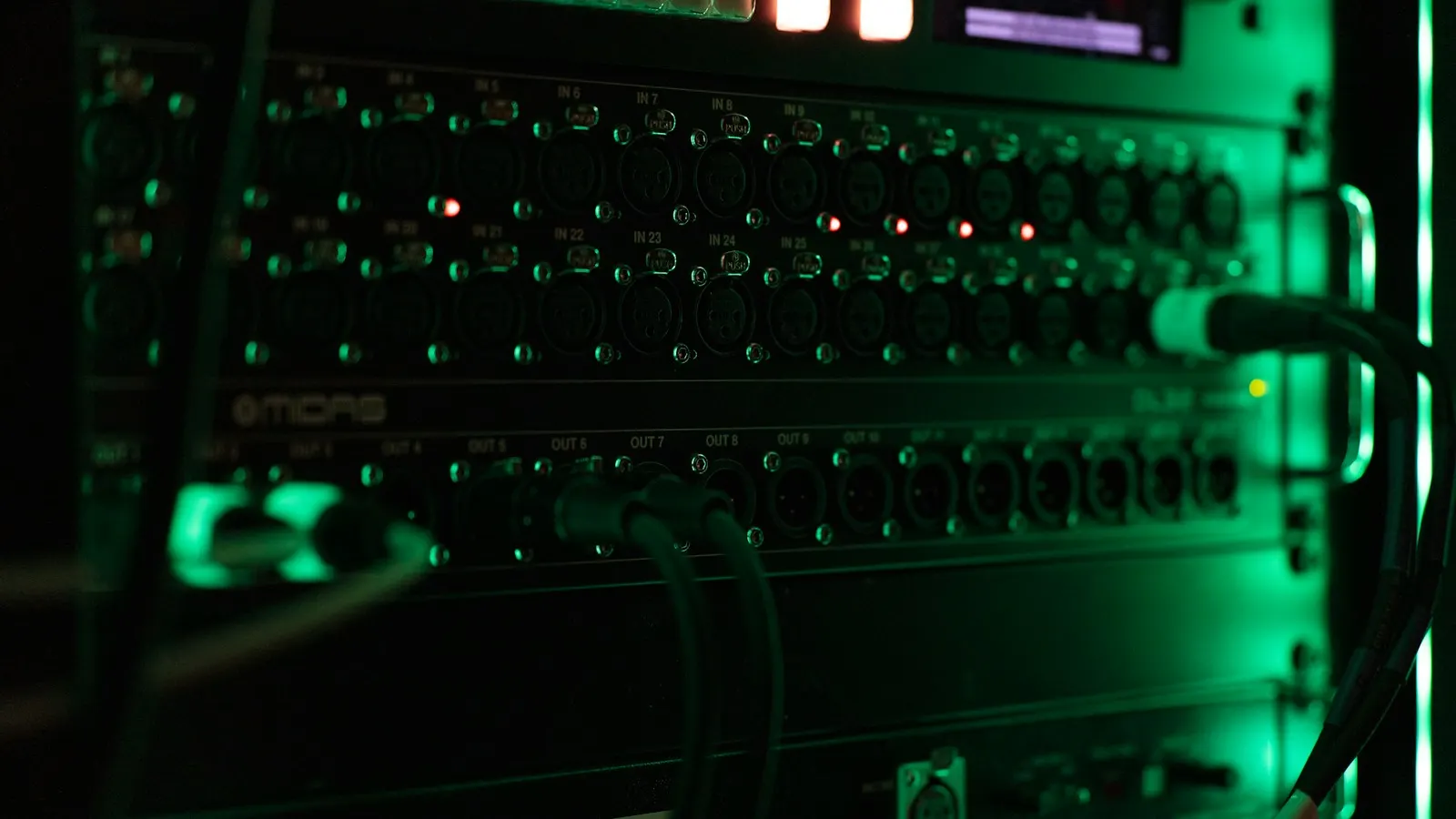
a close up of a computer with green lights — illustrative image
Hetzner
Hetzner

Planning, implementation and agreed operations by OTOKO®

Symbolic image · not a photograph of a provider site

Your brief for OTOKO®

Turning individual servers into a maintainable environment.

Manually configured servers often work well as long as the same people maintain them. As usage grows, however, differences in configuration, updates and backups become harder to control. We record these differences and turn the agreed systems into documented, repeatable processes.

What you engage us for

Infrastructure and support remain clearly separated: Hetzner provides the subscribed resources, OTOKO® takes on the agreed setup and the requested operational services. Which systems, data and maintenance tasks are included is specified before work begins. Your team can continue the handed-over processes itself or hand off defined tasks to us.

The services in detail

Scope

Setting up servers. Backing up data. Organizing maintenance.

The subscribed infrastructure is supplemented with the procedures your application needs. Special attention is paid to documented configuration and the actual backup scope, so that later operation becomes predictable.

Building a server landscape that fits

Application needs, capacity and scalability determine the choice of servers. Cloud servers and dedicated systems are set up accordingly and assigned to their tasks. We document configuration and access so that the setup does not depend on the knowledge of a single person.

What your team keeps working with

A sized server structure with traceable capacity assumptions.

Technical implementation

Cloud servers & dedicated servers

We evaluate CPU, memory, storage access and load profile. The choice between virtual and dedicated systems follows the workload. Development, test and production environments receive documented boundaries, access and owners.


Setting up networks and application access

Which services need to be publicly accessible, and which only internally? This determines network connections, access rules and, where needed, the distribution of incoming requests. The communication of the entire application and its component parts is then tested.

What your team keeps working with

A network concept with application access, access rules and tested load distribution.

Technical implementation

Networks, firewalls & load balancers

Private Networks connect servers; firewalls and load balancers are planned to match the data paths. We review public endpoints, certificates and health checks for the applications. A load balancer alone does not make an application fault tolerant.

Backing up your data in a targeted way

An existing server backup may not cover all additional volumes or application data. We therefore first clarify the actual backup scope. Suitable procedures are planned for the remaining data, and recovery is agreed as a separate, verifiable process.

What your team keeps working with

A backup concept per data asset, including volumes, retention and restart.

Technical implementation

Backups, snapshots & volumes

Server backups and snapshots must be distinguished from the backup of attached volumes. According to Hetzner, these volumes are not covered by the server backup. We therefore plan the backup of your application data explicitly and agree on recovery tests.

Taking on provisioning and maintenance

Recurring configuration steps are turned into usable automation. In addition, we define when updates take place, who handles alerts and how changes are approved. These processes can be handed over to your team or continued within a defined scope of support.

What your team keeps working with

Versioned provisioning and a service catalog for ongoing support.

Technical implementation

Terraform & managed operations

Resources and recurring configuration are automated where it makes sense. Updates, monitoring and changes follow coordinated procedures. OTOKO® takes on only the agreed tasks; access paths and administrative control remain documented in the operating model.

Planning & implementation in detail

Making Hetzner infrastructure manageable in daily operation.

The price of the resources is only part of the operational decision. Setup, maintenance, data backup and how incidents are handled are equally decisive. We add clearly documented procedures to your infrastructure and make visible which tasks your team continues to handle itself.

First, make sense of server inventories that have grown over time

A small server landscape can often be managed at first with just a few personal arrangements. As new applications, changing responsibilities and additional systems are added, however, differences in configuration and maintenance arise. Not every deviation is a mistake; some are explicitly required by an application. That is why we start with a current-state review that brings together systems, purpose, access and known peculiarities. This prevents an apparent standardization from unintentionally changing important functions or overlooking necessary exceptions.

Next, shared setup steps and deliberately retained differences are defined. Recurring configuration can be automated within the agreed scope, while application-specific requirements remain documented. The handover is meant to enable your team to recognize a system, trace a change and plan the next steps. Access credentials alone are not enough for this. Responsibilities, configuration baselines and a procedure for adding new servers or applications to the inventory are also needed.

Align backups with your actual data

Whether an existing backup is sufficient depends on which data an application needs and where that data resides. The operating system, additional volumes, database contents and external storage can require different procedures. Together, we therefore review the actual backup scope and record any gaps. This also clarifies which data versions need to be consistent with one another. A single successful backup does not by itself prove that the entire application can be brought back to a usable state after a disruption.

The assessment results in coordinated backup methods and a recovery plan. This plan describes the access required, the sequence and the people involved who review the outcome. Any required recovery tests are agreed and documented separately. The goal is a clear answer to the question of what can actually be recovered in the event of a failure and what work that requires. The corresponding tasks are assigned to your team or to the agreed support arrangement, so that the procedure has an owner even after the project ends.

Plan maintenance and support as a separate service

Provisioning a server is only the starting point for work on the operating system, the application and changes. For these tasks, we define which components are supported, who grants approvals and which time windows are available. Application partners may need to be involved if an update requires functional tests or a particular sequence. Planning therefore looks at the entire affected application, not just the technical intervention on a single system.

Server costs and support services are considered separately. This allows a clear decision on which tasks you carry out internally and where support makes sense. Within the agreed scope, alerts, maintenance and changes are handled using documented procedures. New systems or additional requirements should be checked against this scope before they are taken into support. This way, even as the inventory grows, it remains clear which services are delivered and which prerequisites your own team must provide for them.

How we work together

You know your business.
We handle the agreed cloud work.

You do not have to organize every technical step yourself. We record tasks and decisions and involve your team wherever its knowledge or approval is needed.

01

Recording configuration and gaps

Server inventory, access and existing backups are gathered. Differences in setup show where standardization or additions are needed.

Your contribution: Name the applications in use and the people who hold existing operational knowledge.

02

Testing procedures in practice

Setup, network and backup paths are implemented. On the agreed systems, we check whether provisioning and recovery can be carried out as intended.

Your contribution: Agree on maintenance windows and check that your applications function correctly.

03

Making knowledge accessible

Configuration and operational procedures are documented and explained. Recurring tasks can be handled internally or handed over to OTOKO® in a defined way.

Your contribution: Determine contacts and approval paths for ongoing operation.

Meeting room at the OTOKO® Cologne office

Example project scenario

A web application needs reliable operations

This is what a joint project could look like. The specific scope results from your current situation.

  1. The current situation

    The application is growing while provisioning, updates and backups are still organized manually.

  2. Our approach

    We review the architecture and add repeatable provisioning as well as coordinated operating procedures.

  3. The target state

    Documented application operations with a clearly justified choice of resources and clearly assigned tasks.

What you get

Results your team
keeps working with.

  • Server and network architecture with an agreed scope of operations

  • Implementation plan with migration, testing and acceptance

  • Documented operations with responsibilities and a cost overview

From interest to a concrete engagement

How we prepare
your project.

For the first consultation, these documents do not yet need to be complete. Together we clarify what is available and which information the assessment should add.

Helpful for getting started

  • Hetzner projects, servers and attached volumes
  • Application architecture and load behavior
  • Existing backups and desired recovery times

How this becomes a specific quote

The scope of services, the involvement of your team, required access, acceptance criteria and the handover are recorded in the quote. Provider fees, project services and ongoing operations are clearly separated.

Discuss your assessment

Before you start

Your questions.
Clear answers.

Is platform operation automatically included in the server price?

The provider scope you have subscribed to and the services provided by OTOKO® are considered separately. Together we define who takes care of operating systems, applications, backups, monitoring and changes.

Which services does OTOKO® offer for Hetzner?

Use cloud servers and dedicated infrastructure in a predictable way. OTOKO® takes on architecture, automated provisioning and the agreed operational tasks for your Hetzner environment.

Can the cloud be connected to our data center?

Yes. A hybrid architecture is planned based on your interfaces, identities, networks and requirements for availability and data locations.

Are my volumes automatically included in the server backup?

No. Hetzner points out that attached volumes are not part of the server backups and snapshots. We treat this data separately and plan a suitable backup.

Does Kubernetes make sense for every Hetzner application?

No. A container platform brings additional operations tasks. We compare the benefit with a simpler server architecture and choose the operating model based on the application and team capacity.

Hetzner with OTOKO®

Where does your Hetzner environment need support?

Name the affected applications and the tasks that currently take up too much time. Together, we check whether configuration, backups or ongoing support should take priority first.

First consultation on Hetzner

Our Partners

  • Microsoft
  • Microsoft Azure
  • Amazon AWS
  • Google Cloud
  • Thales Group
  • Arrow ECS
  • Vodafone
  • IBM
  • Veeam
  • Atlassian
  • JetBrains
  • NinjaOne
  • OPSWAT
  • Utimaco
  • Eviden

Accessibility

Adjust the display to suit your needs.

A simple version is not available for this page yet.

Settings currently apply to this visit. Allow saving in Cookie settings to remember them.