
Navigation

Get in touch
Logo
News

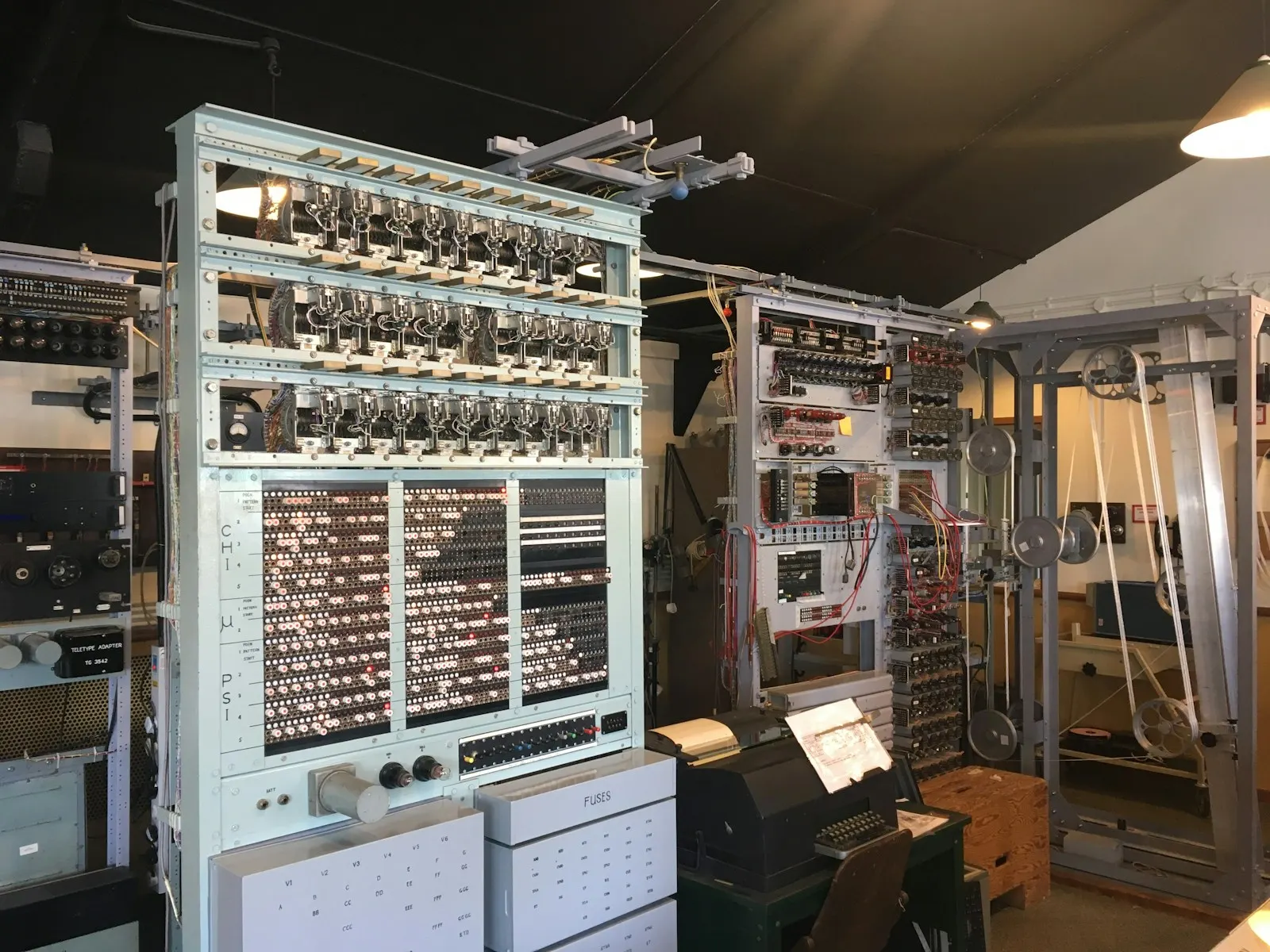
Connecting legacy systems

Old systems must not hold you back.

Important business logic often resides in applications that do not have a modern API. We make the needed functions accessible through suitable adapters and plan a step-by-step decoupling. Your day-to-day business and the consistency of your data determine the migration path.

white and black display shelf — illustrative image
Analysis report with dependency map · Planning and implementation by OTOKO®

Your brief for OTOKO®

What we take care of for you.

The analysis looks at batch runs, file exchange, database access and manual corrections. A table alone rarely explains all the business rules that apply to its data. We talk to knowledge holders and trace representative cases. Access paths supported by the vendor are checked first. Direct database changes can bypass internal controls and are therefore not treated as a convenient substitute for a missing interface.

The possible scope of services

  • Analysis of the legacy system: data model, batch runs, interfaces, dependencies and knowledge holders
  • REST or messaging facade in front of mainframe, AS/400 or client-server applications
  • Change data capture with Debezium for databases such as Db2, Oracle and PostgreSQL
  • File, SFTP and EDI connection with validation, acknowledgment and retry
  • Replacement plan following the strangler pattern with acceptance criteria per function

We define the specific scope, your involvement and the acceptance criteria before the start.

Technology explained clearly

How we carry out the task.

01

A facade limits the dependency

An integration facade translates between the existing logic and a new contract for consumers. It explicitly handles timeouts, error codes and data formats. Change data capture can provide changes for read-only or event-driven scenarios; it does not automatically replace business write operations. During a step-by-step replacement, we define for each function which system is authoritative. Parallel processing requires comparison and a controlled cutover, so that two systems do not update the same order differently.

02

Prove business continuity

We test with business cases that are important or error-prone today and compare the results of both paths. Fallback criteria are agreed before the first production change. The documentation deliberately records remaining dependencies. To get started, system access for analysis, sample data transfers and contacts who know the exceptions from daily operations are often enough.

Meeting room at the OTOKO® Cologne office

A verifiable result

What you keep working with.

  1. Analysis report with dependency map
  2. Facade with OpenAPI description and tests
  3. Replacement plan with sequence and acceptance criteria

The handover brings together implementation and documentation. Together, we review the agreed cases and record any remaining tasks.

Your project in detail

Connect existing systems without overloading operations.

We open up data and functions of older applications through suitable integration points. In doing so, we take into account limited interfaces, vendor constraints and the process knowledge that often exists only in day-to-day use.

Determine reliable access to the legacy system

First, we review existing APIs, exports, message channels and supported extensions. Direct database access can bypass business validations and is therefore not automatically used as the simplest solution. If only files are available, they too need a contract covering format, completeness and processing.

We document codes, special cases and time dependencies together with the business owners. A technically successful transfer is worthless if, for example, a status means something different in the target system. An adapter placed in front can encapsulate such differences and prevent every new application from having to understand the historical format itself.

Integrate step by step and enable later replacement

Read-only connections are often a lower-risk starting point than write connections. For changes in the legacy system, we review permissions, validations and responses. Rate limits and suitable time windows protect systems that are not designed for many concurrent requests.

We build in reconciliation checks that detect missing or duplicate cases. When the system is replaced later, the adapter can be switched to a new target as long as the business-level data contract stays stable. This creates a documented transition instead of yet another undocumented point-to-point connection.

Illustrative project scenario

How the service helps in everyday use.

Example: An older merchandise management system provides files at night. A new portal needs delivery information from them. We check completeness and mapping, provide the data in a controlled way and mark how current it is. Write operations initially remain in the existing system until a suitable approach has been agreed.

This example explains a possible process and is not a customer reference.

Before the first step

Your questions about Connecting legacy systems.

Does the legacy system eventually have to disappear?

No. A stable facade can also support long-term continued operation. Replacement and integration are separate decisions.

Can missing documentation be replaced by scans?

Only partially. Technical analysis shows structure and access, but not all business rules. That is why findings are cross-checked with the business owners.

Your project

Which task would you like to solve?

Describe your situation and the desired result. The selected service will be included in the contact request.

Request this service

Our Partners

  • Microsoft
  • Microsoft Azure
  • Amazon AWS
  • Google Cloud
  • Thales Group
  • Arrow ECS
  • Vodafone
  • IBM
  • Veeam
  • Atlassian
  • JetBrains
  • NinjaOne
  • OPSWAT
  • Utimaco
  • Eviden

Accessibility

Adjust the display to suit your needs.

A simple version is not available for this page yet.

Settings currently apply to this visit. Allow saving in Cookie settings to remember them.