
Navigation

Get in touch
Logo
News

Software consulting

Wrong decisions become costly later.

When business units need new features but IT must first clarify costs, dependencies and risks, we create a shared basis for decisions. We translate business processes into a sound software concept and examine whether buying, customizing or building software in-house is the right path.

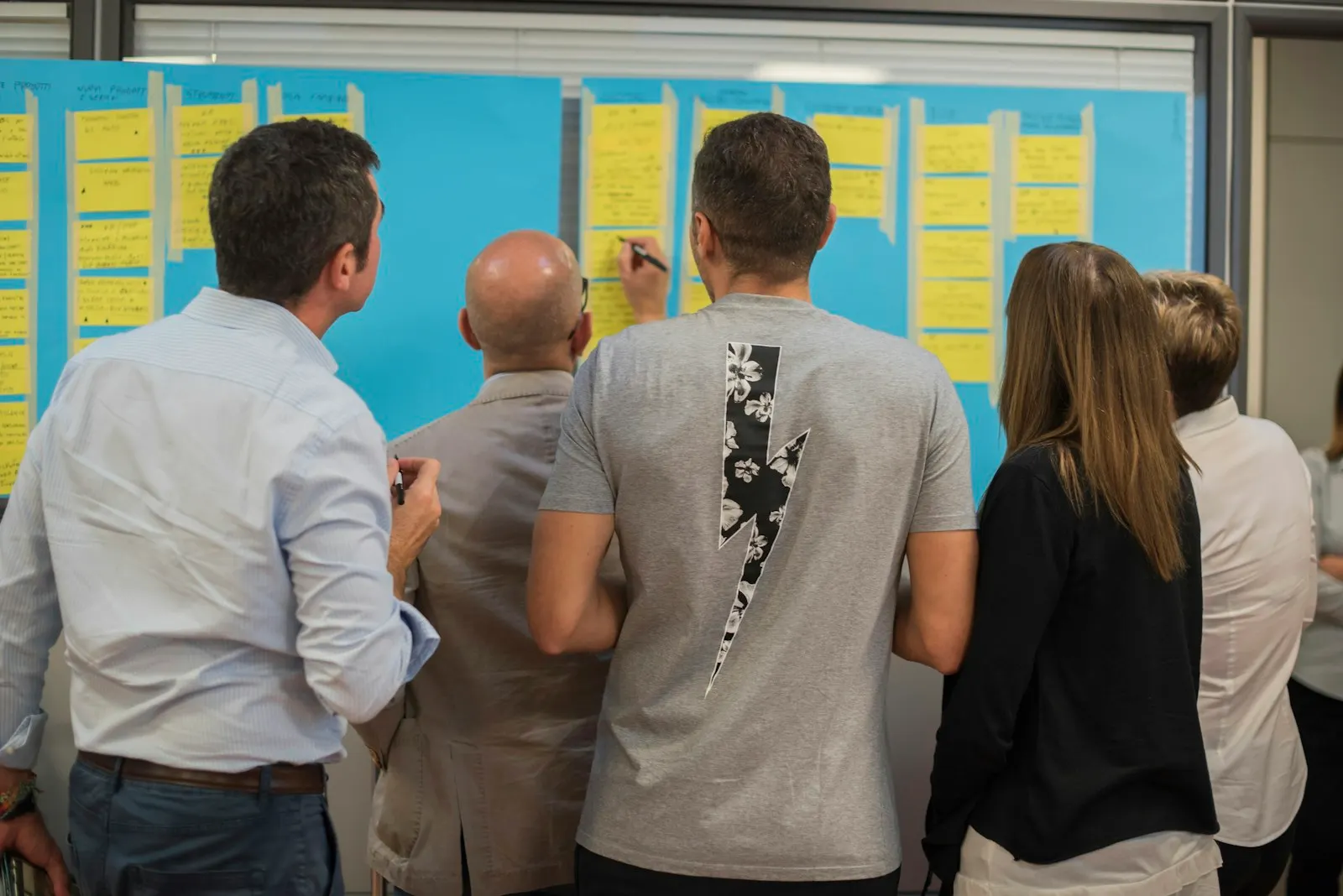
man in white dress shirt standing beside woman in black shirt — illustrative image
From the initial task to the documented handover.

When this service helps

Software consulting: your brief for us.

  • Prepare an investment decision
  • Select standard software or scope custom development
  • Understand technical risks before awarding the contract

Before a development budget is committed, benefit and technical feasibility must align. We look at your existing system landscape, talk to the future users and make dependencies visible. This produces a robust basis for your decision: prioritized requirements, well-founded architecture proposals and clearly named open points.

What the assignment can include

  • Requirements workshops with the business unit and IT
  • Comparison of standard software, customization and in-house development
  • Analysis of data flows, interfaces and operating requirements
  • Architecture concept and technical feasibility review

We define the specific scope, acceptance points and your involvement in the proposal.

The context at a glance

From an open project to a sound decision.

  1. 01

    Understand

    Capture processes, users and boundaries

  2. 02

    Compare

    Weigh solution paths and effort

  3. 03

    Pilot

    Test critical assumptions

  4. 04

    Decide

    Define architecture and stages

Planning, implementation and decisions

What matters for Software consulting.

01

From wish to verifiable requirement

A list of desired features does not yet explain which problem is meant to be solved. That is why we go through the actual workflow with the business unit, IT and future users: who starts a case, what decision follows, what data is missing and where rework happens today? From these conversations, we develop prioritized use cases, roles and measurable acceptance criteria. Exceptions, deputizing arrangements and error cases are part of this as well.

The result is a workable backlog with clear boundaries. Business decisions remain with you; we explicitly document technical assumptions and open questions. This shows which features are needed for the first production use and which extensions can follow later.

02

Buy, customize or build in-house?

Not every requirement justifies custom development. We compare suitable solution paths based on process coverage, integration capability, ongoing costs and the option to switch later. For standard software, we also consider extension points, export options and vendor lock-in. In-house development becomes worthwhile where special processes or product features create a distinct benefit.

A decision paper shows options with prerequisites and consequences. We separate one-time implementation effort from operations, licenses and further development. Unknown interfaces are treated as uncertainty and, if needed, examined through a limited technical prototype.

03

Architecture your team can operate

We plan system boundaries, data ownership, interfaces and access paths together. A modular structure does not automatically mean microservices: a well-structured monolith can be the better choice for a small team. Availability, expected load, recovery and the capabilities of your operations organization determine the complexity.

We record architecture decisions with their rationale and the alternatives that were discarded. For risky assumptions, we agree on evidence, for example an interface integration or a load test. This results in an actionable target architecture, prioritized risks and a proposal for the next work packages.

Tools follow the task

Technology that fits your environment.

  • Process model
  • Architecture decisions
  • Technical prototype

The selection depends on existing systems, your team and later operations. Not every project needs all the technologies listed.

For business owners and technical teams

The decisions behind the implementation.

04

Translating quality goals into testable architecture

“Fast,” “secure” and “scalable” are not sufficient as requirements. For a search operation, for example, we need the expected data volume, concurrent users and an acceptable response time. For an order approval, permissions, logging and behavior during an outage must also be defined. We describe such quality scenarios with a trigger, an operating state and a desired response. Technical decisions and later tests can be derived from this.

Goals can conflict: an elaborate check of every request increases processing overhead; a particularly up-to-date data view can create additional coupling. We make these trade-offs transparent and prioritize them with those responsible. The architecture therefore contains not only components but also assumptions, boundaries and evidence. A load prototype answers a different question than a clickable UI mockup. Each is given a specific test objective and a defined end.

05

System boundaries, data ownership and responsibilities

When an order, an invoice and a customer master record exist in several applications, it must be clear who is allowed to change which information. We draw clear lines between business areas of responsibility and distinguish the terms each of them uses. “Customer” can mean different data and rules for sales, accounting and support. A shared database model for all areas simplifies implementation at first, but can tightly couple later changes to each other.

We review module boundaries, dependencies and handovers between teams. A separate deployment only pays off once the independence gained justifies the added effort for interfaces, monitoring and error handling. The choice between a modular application and distributed services therefore also depends on team size, release responsibility and operational capability. A responsibility matrix, system context and documented architecture decisions record who may change a boundary and which other teams must be involved.

06

Investment, technical debt and a sound roadmap

An architecture concept must be fundable and possible to introduce during ongoing operation. We consider development effort, licenses, data migration, infrastructure and long-term maintenance together. Existing technical debt is assessed by which changes it hinders or which outages it makes more likely. Not every outdated component needs to be replaced immediately; a small, stable component can be less risky than a poorly prepared replacement.

The roadmap links business stages with technical prerequisites. Before a new partner portal, for example, permission management may first need to be clarified. Each stage has a result, decision points and named dependencies. For costs, we use transparent assumptions and ranges as long as significant unknowns remain. This lets you compare proposals and decide whether an additional investigation makes more sense than a premature implementation contract.

Results you can verify

What you take away.

Result 01

Requirements and a prioritized backlog

Result 02

Architecture and data flow overview

Result 03

Decision paper with options and effort drivers

Example project flow

This is what the engagement can look like.

A business unit wants its own order platform. Before development, we compare extending the existing ERP system with adding a complementary portal. A prototype tests the critical ERP connection; the client then decides on the scoped first expansion stage.

Illustrative scenario, not a customer reference or a guarantee of results.

This helps you get started

  • Existing process descriptions and system overview
  • Access to business owners and IT architecture
  • Budget range, target dates and known constraints

Missing documents are not an obstacle. We work out together which information needs to be gathered first.

Your project in detail

A decision paper you can use to steer a project.

We turn a product idea or an unclear need for modernization into a well-founded brief. Business objectives, technical risks and economic limits are considered together.

Reduce uncertainty first where it can become costly

Not every open question needs a complete answer before a project starts. We distinguish decisions with major impact from details that can be clarified during implementation. A preliminary technical test can clarify an unfamiliar interface or a legacy system that cannot be examined; a further workshop alone often does not provide a reliable answer here.

The results are marked as assumptions, proven facts and remaining risks. For different solution paths, we consider rollout effort, ongoing maintenance and ties to products or providers. A low-cost entry point is not automatically the most economical solution over the required period of use.

From concept to stages you can order

We break the project down into results that make sense from a business perspective. A first stage should confirm a usable process or a decisive technical assumption. Dependencies, required input and necessary approvals are named for each stage, so that a schedule does not rest on unrecognized prerequisites.

The handover includes the reasons for decisions and the discarded alternatives with their context. This helps your implementation team assess later changes deliberately. An architecture document is not an unchangeable promise; it is updated in a documented way, and each change is judged by its impact on operation, effort and business value.

Illustrative project scenario

How the service helps in everyday use.

Example: A custom order management system is to replace a spreadsheet solution. We first examine the actual approval process and the existing ERP connection. We then compare customizing a standard solution with custom development against the same criteria, instead of committing to a technology prematurely.

This example explains a possible process and is not a customer reference.

Before you place an order

Your questions about Software consulting.

Do we already need a finished requirements specification?

No. Workflows, existing documents and specific problems are enough to get started. We develop requirements together and mark open decisions. A complete requirements specification can be a result of the consulting, but it is not a prerequisite.

Is consulting possible without subsequent development?

Yes. The consulting can be ordered as a standalone work package. The decision paper, architecture and prioritized requirements are meant to be usable by your internal teams or another implementation partner. Scope and usage rights are defined in the contract.

How reliable is a cost estimate?

An initial range depends on assumptions. We name these assumptions, separate known tasks from open risks and refine the estimate after a prototype or interface review. A seemingly exact figure without a sufficient current-state review would create false certainty.

The next step

Tell us where things are stuck today.

A short description of your application, the problem and your goal is enough to get started. The selected service is carried over into your contact request.

Request this service

Our Partners

  • Microsoft
  • Microsoft Azure
  • Amazon AWS
  • Google Cloud
  • Thales Group
  • Arrow ECS
  • Vodafone
  • IBM
  • Veeam
  • Atlassian
  • JetBrains
  • NinjaOne
  • OPSWAT
  • Utimaco
  • Eviden

Accessibility

Adjust the display to suit your needs.

A simple version is not available for this page yet.

Settings currently apply to this visit. Allow saving in Cookie settings to remember them.